

 (803) 272-4503
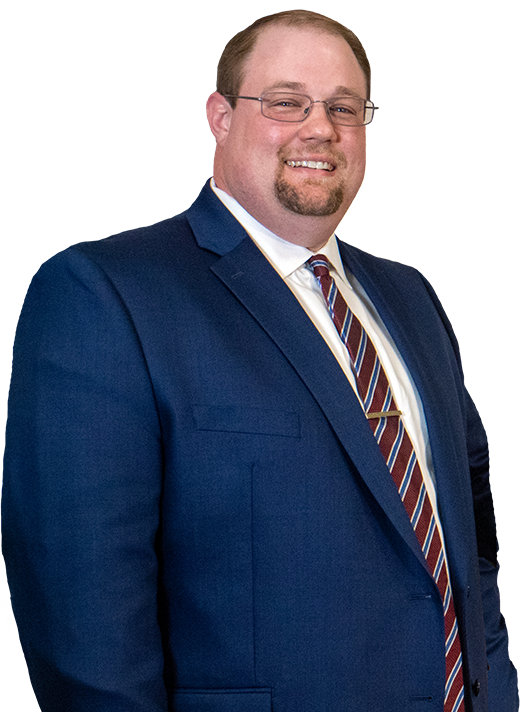
In this episode of the Direct Examination Podcast, hosts Amber Fulmer and Joseph Bias (with Dane Phillips) welcome Professor Debra Gammons. Professor Gammons shares her historic accomplishment of serving as President of both the Greenville County Bar Association and the Charleston County Bar Association. She discusses her work as Director of the Office of Diversity Initiatives at the Charleston School of Law, her passion for community outreach in local public schools, her teaching philosophy, and how student involvement in pro bono and diversity programs creates positive, lasting impacts across South Carolina.
Key Topics Covered
-
Record-Breaking Bar Leadership: Becoming the first person in South Carolina history to serve as President of both the Greenville County Bar Association and the Charleston County Bar Association.
-
Charleston County Bar Agenda: Focusing on the core principles of “Engagement, Education, and Equality,” with a goal to increase active participation among the bar’s 2,000 members.
-
Diversity & Community Pipeline: Engaging elementary, middle, and high school students through Street Law, Cocky’s Reading Express, and Mock Trial programs to inspire youth from all backgrounds to pursue higher education and legal careers.
-
Student Organization Collaboration: Advising student groups (including BLSA, Latina/o Law Students Association, Women in Law, and Alliance for Equality) and emphasizing unity across organizations.
-
Humanizing the Law in the Classroom: Teaching students that every appellate case begins with real human lives and reinforcing the ethical obligation to give back through legal service.
-
Personal Passions & War Story: Her love for relaxation through fishing, her passion for freestyle dancing, and her rewarding experiences empowering underserved students to overcome perceived economic and social barriers to attend law school.
Transcript
Amber Fulmer: Welcome y’all to the Direct Examination Podcast. My name is Amber Fulmer.
Dane Phillips: I’m Dane Phillips.
Joseph Bias: And I’m Joseph Bias.
Amber Fulmer: This week’s guest has previously served as an Assistant Solicitor and an Assistant City Attorney in Greenville, serving as the President of the Greenville County Bar Association. She moved back to Charleston and joined the Charleston School of Law faculty in January of 2009 as the Acting Director of the Office of Diversity Initiatives and a Distinguished Visiting Professor. At Charleston School of Law, she teaches Criminal Law, Constitutional Law, Sex and Gender Issues in the Law, and Trial Advocacy. And since she did such a good job in that role in Greenville, they went ahead and elected her the President of the Charleston County Bar as well! So please help us welcome Debra Gammons to the Direct Examination Podcast!
Joseph Bias: Thank you for joining us, Professor Gammons!
Amber Fulmer: Thank you!
Debra Gammons: Thank you for having me!
Joseph Bias: So, we didn’t look at the history books, we don’t know about the records, but it has to be some type of record to be elected President of the Bar in two different counties on different sides of the state! (laughs) So, one, why run for those roles, and why was that important for you to take on?
Debra Gammons: Well, it is a record as far as I know! I don’t know anyone else in South Carolina who has been President of two different bars. And when you think about our bars in South Carolina, we have the Charleston Bar, the Richland County Bar, and the Greenville Bar—the three largest bars in the state. It has to come from something inside me. When I was eight years old, I decided that I was going to be President of the United States of America. And I said as President, in my eight-year-old mind, it was necessary for the President to know the laws. And then I thought, “Well, attorneys know the laws, so I have to be an attorney!” (laughs) So I just made that jump that I wanted to be an attorney to help people and create positive changes. Serving as President of now the Charleston County Bar, and previously the Greenville County Bar, is one way to make positive changes—not just in the community or town, but also in the state and country.
Joseph Bias: Do we give it one year or two years before you move to Richland County and become President of their Bar as well? (laughs)
Debra Gammons: Well, I don’t think my husband, Brian McQueen, would let us move away from paradise! So I’m back home in Charleston, and I’ll stay here in Charleston.
Joseph Bias: What benefits does a local bar association offer to practicing attorneys in that area?
Debra Gammons: The benefits are twofold. One, you get to interact with other attorneys—new attorneys, as well as experienced attorneys. And two, you get to reach out into the community. So the benefit to attorneys is that interaction, working for the community, helping society—because when people are in trouble, they call attorneys.
Amber Fulmer: What particular challenges do you see facing the Charleston County Bar, or what will you be looking to improve during your time as President?
Debra Gammons: I don’t think in terms of problems; I think in terms of challenges or where improvement is needed. One area where improvement is needed is engagement. My theme for this year is “Engagement, Education, and Equality.” Engagement means making sure those new attorneys come in, work, and reach out into the community. We have about 2,000 attorneys who are members of the Charleston County Bar, and I would like to see at least 50% engagement from our members.
Joseph Bias: To touch on the other two aspects of your motto—Education and Equality—what type of education initiatives do you believe would be successful?
Debra Gammons: Reaching out into the local schools is key. In Charleston, as part of my job as Director of Diversity Initiatives, I’ve gone out to elementary, middle, and high schools to speak with students about what it takes to be an attorney and what they can do now. I tell them that education is the key to success. Whether they decide to be an attorney, a physician, a pilot, an engineer, or a scientist, education is key.
At the Charleston Bar, we are involved with Cocky’s Reading Express, Street Law, and high school Mock Trial workshops for teachers and administrators. The focus has to be on the community—that’s how we create positive change.
Amber Fulmer: One of our co-hosts, Joseph Bias, helps with local high school mock trial teams in Columbia!
Debra Gammons: That program is fabulous! I’ve had law students who I judged in high school mock trial come up to me years later in law school or clerking for Supreme Court justices. I love it!
Joseph Bias: I started coaching when I was in law school, and my first high school student just finished law school and enters private practice now. I’m thinking I need to start taking percentages of their future earnings! (laughs)
Amber Fulmer: You thought it was going to a nice, sweet, paternal place, and then Joseph takes the turn! (laughs)
Joseph Bias: No, I want 3%! (laughs) Speaking of community, we spoke with Mr. Ed Bell on another episode about the investment the Charleston community has in Charleston School of Law. As someone who leads diversity efforts at the school and serves in the Bar, can you talk about that relationship?
Debra Gammons: The Charleston Bar has grown, and its relationship with Charleston School of Law is crucial. We have great involvement through adjunct professors, volunteer programs, internal and external mock trial and moot court competitions, and local attorneys serving as judges.
As for diversity initiatives, student and faculty involvement is key. We have the Black Law Students Association, the Latina/o Law Students Association, Women in Law, and the Alliance for Equality. I always emphasize working together across organizations rather than putting yourself in a box. That is how we achieve unity and positive change.
Amber Fulmer: With all those initiatives in place, what are the long-term benchmarks for diversity outreach?
Debra Gammons: The benchmark is making sure those who are underrepresented in the legal community are represented, and reaching out to all groups across all geographic and economic areas so that when people hear “Charleston School of Law,” they know this school stands for pro bono legal services and community improvement.
Joseph Bias: How does that pro bono focus filter into your classroom teaching?
Debra Gammons: I emphasize to my students all the time: you are representing a human being. When you read appellate cases, remember that every case started with an attorney representing a real person. You will have people’s lives in your hands. When they do pro bono work, they see real people involved and see how their legal work impacts lives firsthand.
Joseph Bias: Reading your bio, it says you love to both fish and dance! (laughs) Law stories often resemble fishing stories—talking about the one that got away or the biggest catch. Do you have a favorite fishing story or a favorite dance style?
Debra Gammons: (laughs) I love fishing, but I’m horrible at it! My husband baits the hook because I don’t like touching live bait, and when I catch a fish, he takes it off the hook for me! For me, fishing is all about centering yourself. It’s very calming to be out on the water reading a book while waiting for a bite. As for dancing, I don’t have one favorite—I freestyle! I love contemporary music and dancing at social events.
Joseph Bias: If you could give a one-minute pitch to a prospective student considering Charleston School of Law, what would you say?
Debra Gammons: I focus on three areas: the environment, the faculty and staff, and the history. Charleston School of Law sits in the heart of history—a few blocks from where the Civil War began, near Revolutionary War sites, and eight blocks from the federal courthouse where Briggs v. Elliott was heard and Judge Waring drafted the dissent that became the foundation for Brown v. Board of Education.
The faculty and staff are sincerely dedicated to student success and treat students like family. And as for the environment—you’re in paradise in Charleston! You have the ocean, the marshes, and the top city in the country while getting a top-tier legal education focused on service.
Joseph Bias: To close out, we ask all our guests for their best war story or memorable moment from their career.
Debra Gammons: When I go out to middle and high schools, students often tell me they never thought they could go to law school or become an attorney. I ask them, “Why would you think that?” They’ll say, “Because I live in a single-parent home” or “My parents are poor.” I tell them, “That is not a reason. You keep your grades up, study, and that will take you to law school.”
Seeing students realize that their background doesn’t limit their potential is the most powerful story I have. Each of us has the ability to create positive change. As Mahatma Gandhi said, “Be the change you want to see in the world.” When you are part of the solution, you make the community better for everyone.
Joseph Bias: Professor Gammons, thank you so much for joining us!
Debra Gammons: Thank you for having me!
Amber Fulmer: Thank you!
Joseph Bias: If you want to follow the Charleston County Bar Association, you can find them on Facebook. You can follow Charleston School of Law on Twitter and Facebook, and you can reach Professor Gammons on Twitter @DebraJGammons. You can follow us @SCLawPod on Twitter and Facebook, follow Joseph at @JosephPBias, Dane at @SCCrimLawyer, and Amber at @RedJudicata. Thank you all for listening, and we’ll see you next week!