

 (803) 272-4503
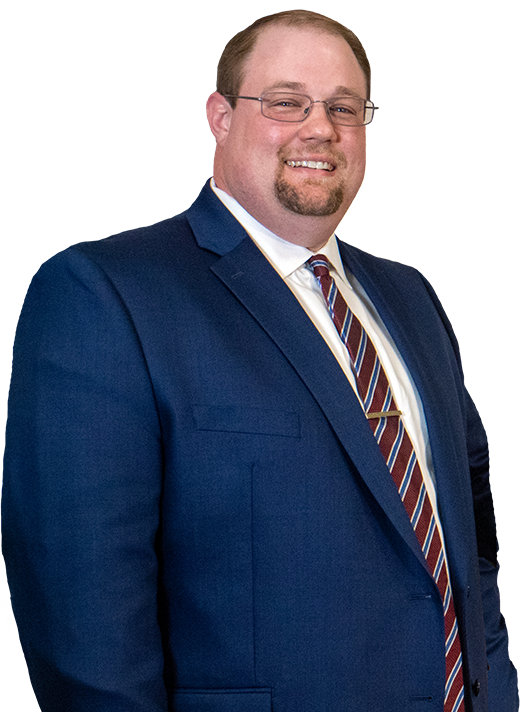
In the inaugural episode of the Direct Examination podcast, criminal defense attorneys Dayne Phillips, Amber Fulmer, and Joseph Bias sit down with State Representative Micah Caskey. Representing Lexington District 89 (Cayce, West Columbia, and Springdale), Rep. Caskey brings a unique perspective as a U.S. Marine Corps veteran, former prosecutor, and current managing attorney of the Caskey Law Firm.
The discussion explores the intersection of law and politics in South Carolina. Rep. Caskey shares insights into balancing a private law practice with legislative duties and dives deep into the complexities of the VC Summer nuclear project fallout. The conversation breaks down the legislative response, the impact on utility rate payers, and what the future holds for South Carolina’s energy landscape.
Key Topics Covered
-
From Prosecutor to Politician: Rep. Caskey’s transition from an assistant solicitor to a state representative in 2016.
-
Balancing Law & Legislature: The day-to-day challenges of running a general law practice (criminal defense, injury, and civil litigation) while serving the public.
-
Social Media in Politics: Navigating Twitter as a public figure and maintaining authenticity.
-
The VC Summer Nuclear Crisis: A detailed breakdown of the 2007 Baseload Review Act, the suspension of construction by SCANA and Santee Cooper, and the financial burden placed on South Carolina rate payers.
-
Legislative Action & Rate Relief: The passage of Act 287, the implementation of interim rate reductions, and the ongoing legal battles protecting consumers.
-
Cross-Examination: Fun insights, including memorable courtroom moments and the historical lawyer Rep. Caskey would most like to grab a beer with.
Transcript
Amber Fulmer: Welcome to the Direct Examination podcast. My name is Amber Fulmer.
Dayne Phillips: And I’m Dayne Phillips.
Joseph Bias: And I’m Joseph Bias. Our guest today is the Republican South Carolina representative for Lexington District 89. He’s representing Cayce, West Columbia, and Springdale. He’s a veteran of the U.S. Marine Corps, the owner and managing attorney of Caskey Law Firm, and a member of the Judiciary Committee and the SC Legislature. He’s a must-follow on Twitter, number 42 of the top 50 most important people in Columbia based on the Free Times poll @micahcaskey. Again, that is @micahcaskey, must-follow on Twitter.
Micah Caskey: It sounds weird hearing it out loud. Welcome. Thank you. Good to see you.
Joseph Bias: Micah, you’ve been in your job as a representative since 2016. First thing I’ll ask you is, how’s it going so far?
Micah Caskey: Good. It’s been a wild experience. I really enjoy it. It’s certainly not without its frustrations, but I knew that going into it. It’s really an honor and a privilege. But it is a lot of fun to be engaged in, you know, big public policy debates.
Joseph Bias: I want to talk a little bit about your particular background because—and we’ll get into your practice in a second—but you started off, I know before you were a representative, you were a solicitor.
Micah Caskey: Correct.
Joseph Bias: And so what about prosecuting made you say, “Hey, I want to run for office”?
Micah Caskey: So, in case we have any audience members who are not from South Carolina, I should remind them that in South Carolina we still use old terms like solicitor instead of district attorney. Out of school I went into management consulting, worked doing God’s work, helping oil companies make more money in Alaska. Left there, came back and became an assistant solicitor. And about the three-year mark, it just happenstance was that my then representative of the last 16 years just decided he wasn’t going to run again. And, you know, I think like most lawyers, at some point we’ve been interested in the public conversation, the public issues, and debates. And I just said, “Hey, here’s maybe an opportunity for me to raise my hand and try and give it a go.”
Dayne Phillips: Well, first thing, Micah, I want to say thank you for being our first guest. You get to open us to the world of South Carolina politics, even though this isn’t a political show. It’s based on South Carolina lawyers. But obviously, in South Carolina, a small state, lawyers and politics, there is a lot of interbreeding, so to speak.
Micah Caskey: We just say overlap, but yeah. Overlap. It’s a lot better than interbreeding.
Dayne Phillips: So with that being said, you’re in private practice now, former solicitor. Actually, you were a solicitor when I was a public defender. And so now we’re both in private practice, and schedules are much different than being on the government dime. How do you manage your day-to-day life, your time management of being a politician, a representative of a group of people, and run a law firm?
Micah Caskey: I’m not going to suggest that I’ve got it figured out. It’s sort of an ever-evolving challenge. But it’s about deliberative time management. Like I dedicate time to planning and trying to make sure that I’ve got things straight for the week. If I don’t write it down, then I’m likely to forget. And more importantly, I stress about the things that I might be forgetting.
Dayne Phillips: What type of law are you doing? What type of things can you help people in South Carolina with?
Micah Caskey: I do a general practice. About a third of my practice is criminal defense. A third is injury-related stuff. And a third is potpourri cases, whether that be the landlord-tenant dispute, a little bit of estate planning, but also civil litigation. Tomorrow I’m going to Kershaw County to argue a case that involves a breach of contract regarding a bond issuance. It’s a wide-ranging practice, like most lawyers who are trying to figure out how to pay Sallie Mae back.
Joseph Bias: Have you found being a representative has changed the nature of your practice?
Micah Caskey: When I got elected, I had to leave the solicitor’s office because our state constitution prohibits dual office holding. But for that, I would have stayed there. I really enjoyed that. Which is to say that I never really found what normal looked like. And so I just came out and have been juggling all of this all along.
Joseph Bias: And as a sole practitioner, you wear so many hats. You’re the one who brings in the business. And at the end of the day, you’re the one that has to pay yourself.
Micah Caskey: Right. It can be very scary. I was sick a couple of weeks ago, and you realize, like, if I’m not working, I’m not making any money at all. That’s a scary thought. The representative hat is fun because I enjoy it a lot, but it’s just a time management gig.
Amber Fulmer: With your Twitter, I know that’s kind of some recent popularity that you’ve received. What’s your stance on social media and lawyers?
Micah Caskey: I don’t do any legal tweeting at all. I think that’s a precarious road to go down. But just to be clear, I’ve been tweeting awesome stuff for a long time. It’s only since I’ve gotten elected that serious people have ever looked at it.
Dayne Phillips: How much thought goes into all of that stuff? With every tweet you put out, that’s a statement from you representing your district. Or is it just you having fun?
Micah Caskey: I try to approach it with a certain levity. There’s a line to cross, a line that keeps moving. It’s something I’m aware of because the first time I saw a tweet quoted as “Lawmaker says,” I forgot that I’m a lawmaker. I don’t want to embarrass my constituents. Ultimately, you can’t please everybody. It’s a delicate balance being a politician; you need to care about what people think, but you can’t be hamstrung by it.
Dayne Phillips: Obviously, you’ve been in the limelight when it comes to this VC Summer, SCANA, SCNG situation. Can you give the background on how we got to this point? If somebody has no idea other than their rates have gone up, how did we get here?
Micah Caskey: Let’s start with the world in 2007. The economic conditions are such that we say nuclear power is a good idea. We think there’s an impending carbon tax coming. The projections for energy needs are wild. So the decision gets made that we need to move forward in South Carolina with more nuclear energy. They passed the Baseload Review Act (BLRA). If you’re a power company and wanted to build a new power plant, usually you build it and then bill customers once it becomes “used and useful.” The BLRA flipped that on its head. It said you can’t recover your capital costs yet, but you can recover your financing costs already. So we started paying the interest as we go. Ultimately, once that power plant comes online or is abandoned, you can recover those capital costs from your customers.
Joseph Bias: At this point, who’s building this power plant?
Micah Caskey: SCNG (or SCANA) and Santee Cooper enter into an agreement. SCNG is the 55% partner and Santee Cooper is the 45% partner. They contract with Westinghouse to build a modern AP1000 unit. And then stuff starts going wrong. Some of it is the fault of SCNG, like delays in right-of-way acquisition. But there are a lot of construction problems that start to compound.
Dayne Phillips: I don’t know how far you can go into it, regarding the internal documents from SCANA that showed it wasn’t something that just happened overnight, but a long course of conduct.
Micah Caskey: That’s one of the interesting parts of this case: who knew what, when, and what should they have known? SCANA is a publicly traded company with disclosure obligations. Did those disclosures give the substance of what they were required to do? In my view, no. SCNG commissioned the Bechtel report, an engineering consulting group. In that study, there is a 54-page litany of problems they uncovered.
Dayne Phillips: Why was that Bechtel report initially secret?
Micah Caskey: SCNG had an out-of-state law firm commission that report, arguing it was done in preparation for litigation, so they claimed it was protected information. The costs have ballooned wildly from projections around $6 billion to latest estimates of about $15 billion. The contracts were initially open-ended, cost-plus. By last summer, Santee Cooper said, “We can’t go forward anymore. We’re out.” So they announced the suspension of construction.
Joseph Bias: Can you talk to us a little bit about the federal ruling that was issued yesterday by Judge Childs?
Micah Caskey: This last legislative session, we passed Act 287. We closed the front door to the Baseload Review Act—we effectively repealed it for future projects. We stepped in and set an interim rate, which is the 15% reduction in your bill you hear about. We also inserted definitions of prudency because, to recover capital costs in an abandonment proceeding, the utility company has to show their actions were prudent. Judge Childs issued her order refusing SCNG’s preliminary injunction against the interim rate. So we’re going forward with that. She also cited with approval the prudency definitions we included in the new act.
Dayne Phillips: For the average consumer, did this affect me? And what do I do?
Micah Caskey: Yes, it has affected you. Unless you’re a Duke Energy customer, you are paying for this. Even co-op customers through Santee Cooper are paying. The legislature has passed a good law that addresses many of the problems. If people have opinions on the future of Santee Cooper, they should reach out to their elected officials.
Joseph Bias: How would you like this to end for your constituents and the state?
Micah Caskey: If I had a magic wand, we would just wipe it off the books, and everybody would go back to life with lower bills. I would like to see SCANA remain a South Carolina-based company, but ultimately, my allegiance is to protecting the innocent rate payers. Electricity is a constant cost, almost like a quasi-tax.
Dayne Phillips: Thank you for covering this issue. We definitely appreciate it. Now, how did you get from the Marine Corps to law school?
Micah Caskey: I didn’t want to go to law school initially. I was a combat engineer officer in the Marine Corps. I wanted to get an MBA to lead an organization. I came back to Columbia for the IMBA program and decided that having a law degree as well would be to my advantage.
Joseph Bias: What is the most memorable case or issue that you’ve worked on as a lawyer?
Micah Caskey: The fact patterns out of Lexington County are pretty ridiculous. It was pretty memorable when we put an officer on the stand and he admitted he never went into the building he took out burglary warrants on.
Dayne Phillips: If you could work with any other lawyer in history, who would you choose and why?
Micah Caskey: Probably Alexander Hamilton Jr. Aaron Burr’s second wife found out he was cheating on her, so to get him back, she hired Alexander Hamilton Jr. as her attorney. That is amazing. I’d certainly drink beers with that guy.
Amber Fulmer: We appreciate you coming on. He’s a must-follow on Twitter @micahcaskey. You can follow us @SCLawPod on Instagram, Twitter, and Facebook. Follow Dayne @SCCriminalLawyer and Joseph @JosephPBias. Thanks for listening to the Direct Examination Podcast.