

 (803) 272-4503
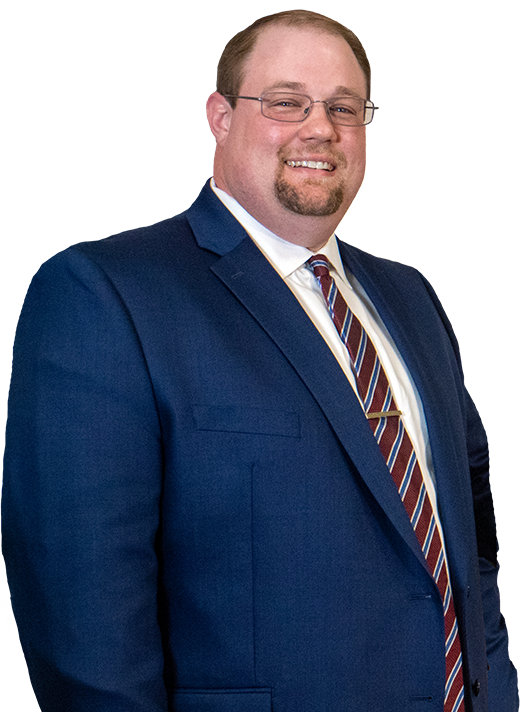
In this episode of the Direct Examination podcast, hosts Amber Fulmer and Dane Phillips welcome nationally renowned criminal defense attorney David Rudolf, best known for his defense of Michael Peterson in the trial featured in the hit Netflix documentary series The Staircase. Rudolf shares the trajectory of his career, beginning as a public defender in the South Bronx alongside Innocence Project co-founder Barry Scheck, before transitioning into federal public defense, clinical teaching at UNC Law, and private practice.
The wide-ranging conversation dives deep into systemic issues within the criminal justice system, including the dangers of “junk” forensic science, improper blood spatter analysis (highlighting the misconduct of SBI agent Duane Deaver), and false confessions elicited through the Reid interrogation method. Rudolf also discusses media manipulation by prosecutors, Judge Orlando Hudson’s post-trial reflections, his trial work defending former NFL player Ray Carruth, advice for young attorneys, and the intriguing “Owl Theory”.
Key Topics Covered
-
Public Defender Roots: Starting a legal career in the South Bronx in an office with Barry Scheck and the inspiration behind public defense.
-
The Perils of “Junk” Science: How pseudo-sciences like flawed blood spatter analysis and hair comparison contribute to wrongful convictions across the country.
-
Interrogation & False Confessions: The Reid Technique and how psychological coercion leads to false confessions, citing Brendan Dassey’s case in Making a Murderer.
-
Media & Prosecution Tactics in The Staircase: Stage-managed media coverage during the exhumation of Elizabeth Ratliff and Judge Hudson’s later admission regarding trial rulings.
-
The Ray Carruth Trial: Defending Carolina Panthers receiver Ray Carruth against death penalty charges in a high-profile three-month trial.
-
Advice & The “Owl Theory”: Following career passions, overcoming investigative tunnel vision, and an overview of the “Owl Theory” in the Peterson case.
Transcript
Amber Fulmer: Welcome, y’all, to the Direct Examination Podcast. I’m Amber Fulmer.
Dane Phillips: And I’m Dane Phillips.
Amber Fulmer: And Joseph Bias is not here with us tonight, but he is here with us in spirit. He is driving somewhere in Georgia. Banjos are probably playing. We just don’t know where that he is right now. But before we get started, we just want to thank our listeners for their overwhelming support, both on social media through contacting us, through our Gmail account for posing questions, or giving us ideas for guests. Without you, this would not be possible. You are the reason that we put on this podcast for lawyers alike and just for the general public. Our hope is to make this entertaining for you, educational, and to give you a better sense of what we do. So, again, thank you so much for your support, for following us, and for downloading these podcasts. Without further ado, I’m going to turn it over to Dane, who is giving us an introduction to one of our best guests thus far.
Dane Phillips: Absolutely. So we’re incredibly excited. Although this is a South Carolina-specific podcast, we welcome our neighbor to the north, an attorney who is nationally known for his criminal defense work. Our guest today is David Rudolf. He’s primarily known for his work in the Michael Peterson trial, which is memorialized in the famous Staircase documentary that’s currently on Netflix. I became aware of this documentary many years ago when it first came out, and I’m just excited that Netflix was able to revive it and have the additional episodes to follow up with essentially the biggest turn of the case.
To give you a little bit of background information on David’s life, he began his career as a public defender in the South Bronx, New York. He later became a federal public defender in Brooklyn. Then as a transition, he took a job as a clinical professor at North Carolina Law School, where he taught the criminal practice clinic. In 1982, he started his own law firm with a good friend and, as they say, the rest is history. We’re going to try to do as deep of a dive as we can into some of these issues that I think our listeners will be pleased to learn more about, especially ones who have followed the documentary on Netflix. Again, just thank you for coming on the show, David.
David Rudolf: Well, thank you for having me. I really appreciate it.
Dane Phillips: We first wanted to start with your career as a lawyer. As somebody who started out as an appellate defender and then went to do trial work as a public defender, I love to hear people’s stories of how they started doing public defense. Since Monday was Constitution Day, the Sixth Amendment’s right to counsel is the cornerstone of the bedrock of our existence. Why did you become a public defender? Was that something you had always wanted to do when you went to law school?
David Rudolf: Well, like a lot of people of my generation, I grew up watching Perry Mason. Perry Mason was a criminal defense lawyer who everybody admired. You know, he wasn’t the sort of stereotypical sleazy defense lawyer that you see on TV and in movies these days. He was an upright, righteous person who defended people ethically and usually successfully. So that played a role.
When I was in law school, I was in a clinical program and had a chance to represent indigent folks charged with misdemeanors. That was a great experience. So for me, it was sort of a natural evolution once I got out of law school to go into the public defender’s office. I was fortunate—I went up to the South Bronx where I got an amazing number of hearings and trials. I actually worked in the same office as Barry Scheck, who went on to fame with the Innocence Project. Both of us worked in a very unglamorous office on the top floor of a burnt-out building in the South Bronx until we both moved on to our next stops.
Dane Phillips: Just the thought of you working with Barry Scheck and how both of your careers evolved… As a graduate of the National Criminal Defense College, I know the head of that office is critical in teaching defense attorneys to be as zealous advocates as possible. Having essentially the co-founder of the Innocence Project and you in the same office as young lawyers is quite amazing.
David Rudolf: It was a great time, and we sort of viewed ourselves as in a war. It looked like a war zone. We ate at one restaurant; the DAs and the cops ate at a different restaurant. That was just how it was back in those days. Everybody essentially got along, but we sort of stuck to our own tribe.
Dane Phillips: I noticed on your website that you were a faculty member at the National Forensics College, which Barry Scheck helped co-found with the NACDL. Forensic science played a critical role in the Peterson trial—specifically improper, flawed “junk” science and prosecutorial misconduct that allowed that to happen, leading to him receiving a new trial. Would you like to go through the progression of how forensic science played such a crucial role in that case?
David Rudolf: Yeah, and let me broaden it out a little bit, if you don’t mind. When I started practicing law, forensic science had very little to do with criminal prosecutions and defense. We had to deal with fingerprint evidence, maybe handwriting analysis, but you didn’t have all these sort of junk sciences—paint comparisons, hair comparisons, and blood spatter analysis. None of that really existed when I first started practicing.
Gradually over the years, these pseudo or fake sciences started taking root. It really developed as police officers—not scientists—decided that they could glean conclusions from evidence that really had not been subjected to any kind of scientific analysis. You have people claiming to be able to read blood spatter after taking a 40-hour course from somebody who wasn’t a scientist himself, or hair comparisons being done by people who really didn’t understand scientific methods. It became a huge problem in the criminal justice system, and it remains a huge problem leading to a vast number of wrongful convictions. There’s an untold number of people in prison right now because of faulty hair comparisons, which even the FBI has now conceded can’t reliably match one hair to a particular person. It’s been a big problem that I’ve focused on, and it obviously was a huge problem in The Staircase with Duane Deaver and his phony blood spatter analysis.
Dane Phillips: Have you taught at the National Forensics College?
David Rudolf: I have, actually, but not about blood spatter. I taught about false confessions, which is another whole area—the Reid method of interrogating people and the false confessions that method elicits.
Dane Phillips: For our listeners who are not lawyers, would you mind explaining briefly what the Reid method of interrogation is?
David Rudolf: The Reid method is a method of interrogation invented by a Chicago detective probably 50 or 60 years ago. It basically postulates that when somebody comes in and denies a crime and you think they really are guilty, you put them in uncomfortable psychological positions and give them excuses to confess, thereby inducing people to essentially agree with you when you suggest that they’re guilty. It has produced a number of false confessions, and it’s now recognized that the method has substantial fundamental flaws.
Dane Phillips: A classic example for listeners who watched Making a Murderer would be Brendan Dassey’s confession, which hits all the points of a false confession given his age and intellectual disability. The technique used by law enforcement in that case was classic Reid technique.
David Rudolf: Absolutely, literally classic. The result was this ridiculous confession elicited from a mentally challenged juvenile.
Dane Phillips: You have an upcoming speaking event discussing The Staircase and other cases in Charlotte on October 4th, correct?
David Rudolf: I am, and we’re going to be joined by the producer of The Staircase, and a criminal defense lawyer who was a reporter covering the trial will serve as moderator. We’ll take questions from the audience and disclose behind-the-scenes events that weren’t covered in the documentary but were very significant. The event is at the McGlohon Theater in Charlotte. You can go to CarolinaTix and search “Inside the Staircase” for tickets.
Dane Phillips: Regarding media coverage in the Peterson trial, how did the media treat the defendant? What was your perception of how he was treated once the information about the death in Germany broke?
David Rudolf: It played a critical role because that was all stage-managed by the prosecution. They exhumed Elizabeth Ratliff’s body about two weeks before the trial was set to begin. It could have been exhumed months earlier. They invited the media to the exhumation, reporting from the grave site as the casket was removed. Then reporters went along on a 1,400-mile caravan to bring the body back to the same medical examiner’s office in North Carolina that had already determined a homicide in Kathleen Peterson’s case, instead of having a forensic pathologist in Texas examine it. When the autopsy report came out, it stated cause of death as “homicidal attack,” which was beyond anything I’d ever seen in an autopsy report. It was all carefully stage-managed by prosecution and police to exert maximum prejudicial impact on the jury pool, and that’s exactly what it did.
Dane Phillips: It was good to see the interview in the new episodes with Judge Hudson, where he had a moment of reflection and admitted publicly that he probably made the wrong call during the first trial regarding those prejudicial rulings.
David Rudolf: I think that was courageous of him. I don’t think a lot of judges would have said what he said. From my perspective, it was about 15 years and three months too late, but at least he had the courage to say he thought he was wrong.
Dane Phillips: What are some key moments that occurred during trial that were not reflected in the documentary?
David Rudolf: In the documentary, they showed women brought over from Germany who talked about blood all over the walls and stairs in that apartment in Germany. What wasn’t incorporated into the documentary was that we went to Germany and found the Army CID agent, Steve Lyons, who went to the scene contemporaneously. He testified at trial, and we introduced his report showing there wasn’t blood all over the walls—there was a small amount of blood under her head, confirming cause of death as a brain aneurysm. The autopsy done at Walter Reed Army Hospital confirmed a natural death from a brain aneurysm. I certainly would have liked to have seen that evidence displayed in the documentary to counter those witnesses.
Dane Phillips: In South Carolina, we don’t have attorney-conducted voir dire, so a six-month criminal trial is unheard of here. How long did jury selection take in the Peterson case?
David Rudolf: Jury selection took about two months. We started picking a jury in May and didn’t start hearing evidence until July. We did individual voir dire outside the presence of other jurors. We went through literally hundreds of people. Once someone indicated they couldn’t be fair, they were gone relatively quickly.
Amber Fulmer: Moving into our cross-examination section, what issue do you believe is the biggest threat to justice in our system right now?
David Rudolf: A combination of arrogance on the part of investigators and tunnel vision. Police quickly decide who committed the crime based on hunches or apparent motives, and then tunnel vision kicks in. Once you make up your mind about a theory, you select facts consistent with that theory and ignore or minimize facts that contradict it. Because it’s an adversarial system with egos involved, once charges are brought, it’s very hard to stop. That leads to fake science being brought in to bolster a weak case.
You saw that with Duane Deaver’s experiments. His experiments weren’t designed to find the truth; they were outcome-driven to replicate his theory.
Dane Phillips: Did Duane Deaver ever spend any jail time for his misconduct?
David Rudolf: No. He didn’t even lose his job over that particular incident—he lost it over a wholly separate problem. Prosecutors don’t tend to prosecute their own witnesses who commit perjury.
Amber Fulmer: Besides the Peterson case, what is the most memorable case you’ve worked on?
David Rudolf: The Ray Carruth case, which was another high-profile trial. Ray was a Carolina Panthers receiver in the late ’90s charged with masterminding the murder of his pregnant girlfriend. It was a three-month death penalty trial. He was acquitted of murder, convicted of conspiracy, and sentenced to 20 years. During that trial, the person who actually fired the gun threatened me in the courtroom, telling me he could rip me limb from limb like a little rag doll. That stands out in my memory.
Amber Fulmer: What advice would you give a young lawyer?
David Rudolf: Follow your passion. When graduating law school, don’t worry about what job path leads to the best outcome 30 years down the line. Do what you feel in your heart and gut you want to do. If you do what you really love, you’re not really working.
Dane Phillips: What are your thoughts on the “Owl Theory” in the Peterson case?
David Rudolf: The Owl Theory is very viable and much more logical than the blowpoke theory the prosecution used. It explains evidence we couldn’t understand back in 2003 due to tunnel vision. It wasn’t brought to our attention by a neighbor until the very end of the trial when it was too late to introduce. People can read more on my website at www.davidsrudolf.com or come to the Charlotte event on October 4th.
Amber Fulmer: Thank you so much for being with us today, David. The Inside the Staircase event takes place in Charlotte on October 4th at the McGlohon Theater. You can follow David on Twitter and Facebook @DavidSRudolf. Follow us @SCLawPod, Joseph @JosephPBias, Dane @SCCrimLawyer, and Amber @actredjudicata. Thank you, David!
David Rudolf: Thank you so much for having me, I really appreciate it.